Quantum Computing: What It means for you?
How Quantum Computing can Revolutionise Industry, While Posing One of the Biggest Security Challenges of our Generation
 Stefan MayerTechnology Developer Degree Apprentice at Barclays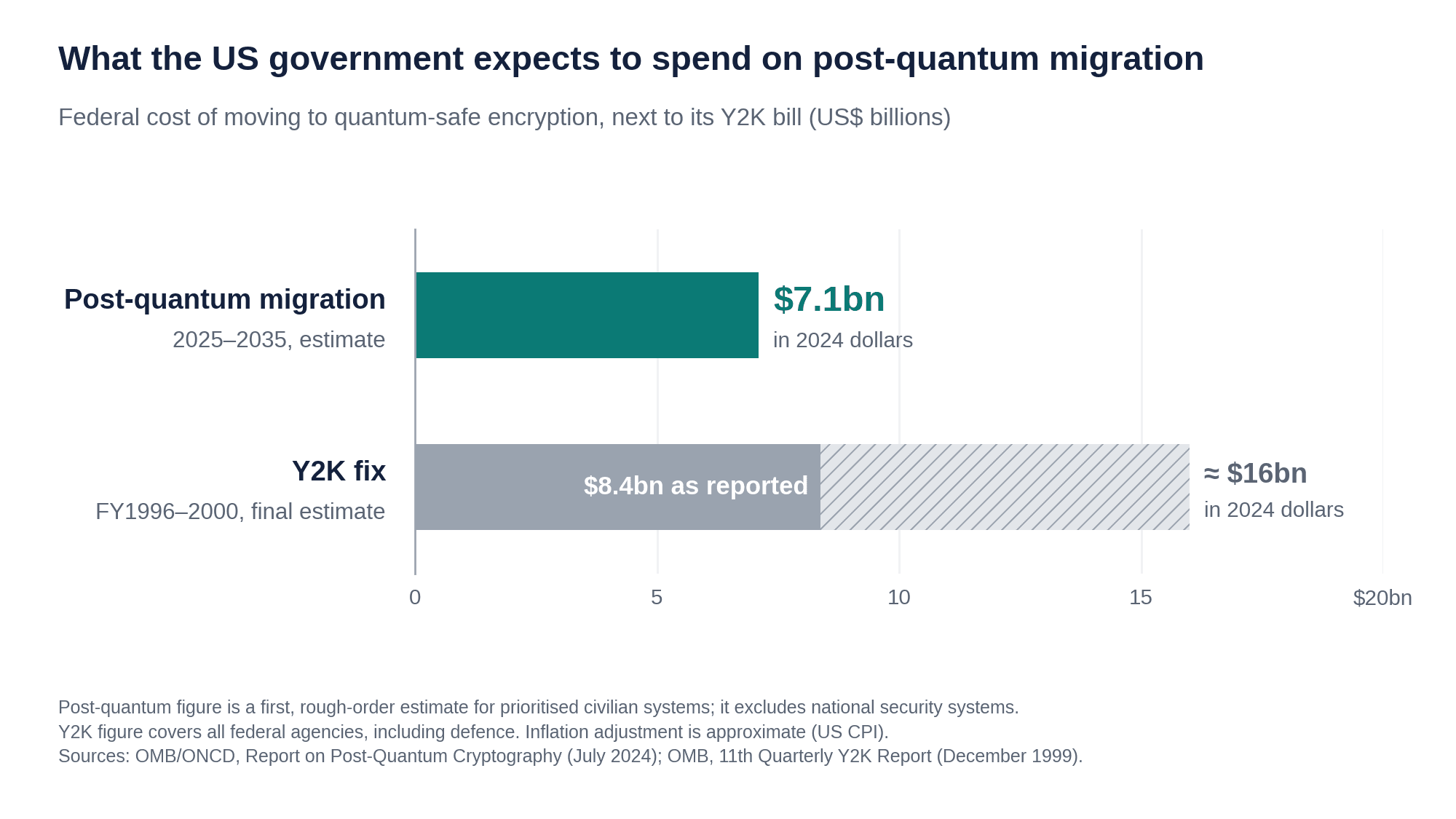
Why Should You Care?
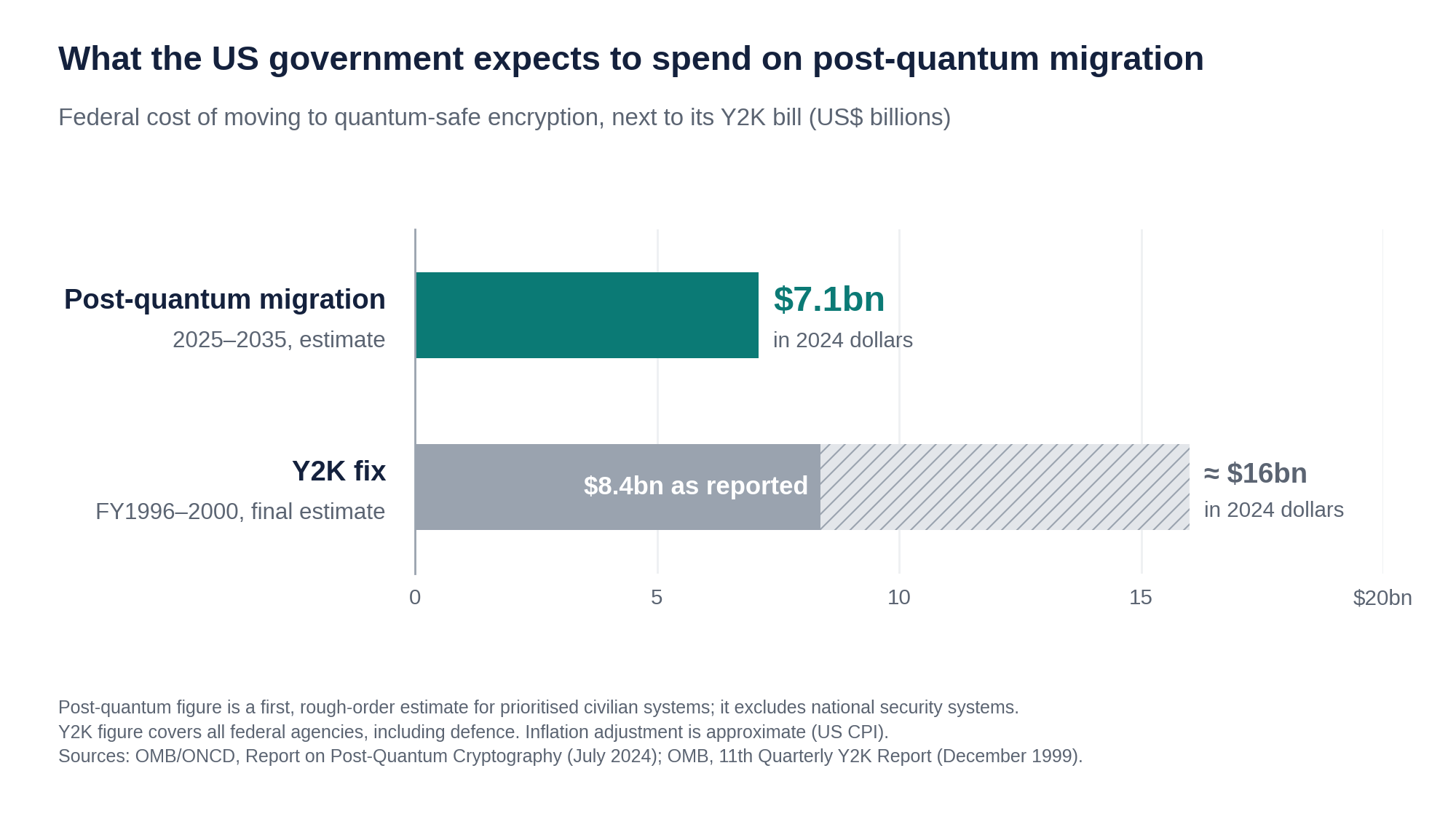
Since quantum computing was first proposed in the early 1980s, it has changed how researchers, governments and businesses think about the future of computation and cybersecurity. The technology promises enormous public good, such as simulating complex chemistry to help develop cancer drugs. But a sufficiently powerful quantum computer could also break the public-key encryption that protects everyday activity, from banking to telecommunications. Defending against that means replacing or updating cryptography across governments, financial institutions, telecoms networks and countless embedded systems. The global cost is uncertain, but one government’s figures give a sense of scale: in 2024 the White House estimated that migrating its prioritised federal systems alone would cost about $7.1 billion between 2025 and 2035.
For now, though, the threat is still on the horizon: today’s quantum machines are large, fragile and error-prone, and need specialist teams to run, much like the early vacuum-tube computers.
How Does It Work?
Quantum computing uses multiple possible states at once, called superposition, to work through a problem. Unlike classical bits, which are either 0 or 1, qubits can exist in superpositions of both, so the number of states a quantum computer can represent doubles with each qubit added. Quantum algorithms exploit interference between these states to solve certain problems, such as factoring large numbers, far faster than any known classical method, though current devices are limited by noise that grows with system size.
But in contrast to classical computing, a single run doesn’t hand you a guaranteed answer. When you measure a qubit you get a plain 0 or 1, and the quantum state only sets the probability, a number between zero and one, of getting each. So you run the calculation many times and see where the results pile up.
A quantum computer isn’t necessarily better than a classical one. I like to reach for one of my favourite analogies: a classical computer is like a car and a quantum computer is like a cargo ship. Both get things from A to B, but the ship isn’t a faster car. It’s a different kind of vehicle for jobs a car could never do.
What Are the Possible Benefits?
The highly experimental nature of quantum means we are only just discovering possible use cases, and the practical deployment of these is mostly unrealised. But the first signs have started to emerge.
One of the main benefits is the simulation of complex molecules, used in creating new drugs and materials. Simulations of this kind are set to revolutionise the industry, saving substantial amounts of time and money by streamlining workflows: moving from physically creating the desired compound and testing its viability to simulating its structure and interactions on a computer. One of the best examples comes from Google and Boehringer Ingelheim, who showed that a future quantum computer could simulate the electronic structure of Cytochrome P450—a family of enzymes that metabolises most of the drugs we take—more accurately than classical computers can.
Cutting-edge capabilities like this would allow scientists to do research faster and more effectively than before, while cutting costs and man-hours.
Could It Destroy All Modern Infrastructure?
“Technology is a useful servant but a dangerous master.” — Christian Lous Lange, Nobel Peace Prize laureate, 1921
There are dozens of risks that are generated by this technology, from forged digital signatures to the collection of sensitive data, which is what I want to focus on.
Harvest Now, Decrypt Later (HNDL) attacks are currently one of the biggest risks presented by quantum—if not the biggest. The worrying part is that they don’t need a quantum computer to get started. The current thinking is that attackers can harvest your encrypted data now, keep it, and decrypt it later, once a quantum computer is powerful enough to break the encryption protecting it. And you might never know it had happened: nothing is broken at the time of the theft, so there is often nothing to detect.
So what is actually worth harvesting? Anything that will still matter in ten or twenty years: medical records, state secrets, intellectual property, long-term financial contracts. A stolen card number expires; a genome does not.
That is also the honest answer to the question above. Quantum will not destroy modern infrastructure in the sense of switching it off. What it threatens is the public-key cryptography that almost every system quietly relies on to keep conversations private and prove who is on the other end. The replacements already exist. The hard part is rolling them out everywhere before the data we are sending today runs out of time.
Enjoyed this?
This essay was first published on my Substack. Subscribe to get the next one straight to your inbox.
Keep reading